Suzhou Volsun Electronics Technology Co., Ltd.

Views: 0 Author: Site Editor Publish Time: 2026-02-06 Origin: Site


Have you ever wondered which type of silicone is safe for your electronics? Choosing the right material can make all the difference in protecting your devices. In this article, we will explore the importance of selecting the right silicone potting compound for electronics and how it ensures the safety and longevity of your components. You will learn about the key properties that make silicone the ideal choice for electronics and why it is crucial in preventing damage.
Silicone potting compounds are essential materials used to protect and encapsulate sensitive electronic components. Made from silicone polymers, these compounds provide crucial insulation, thermal stability, and environmental protection. They are commonly employed in electronics that need safeguarding against moisture, vibration, temperature changes, and other environmental factors that could impact their functionality and lifespan.
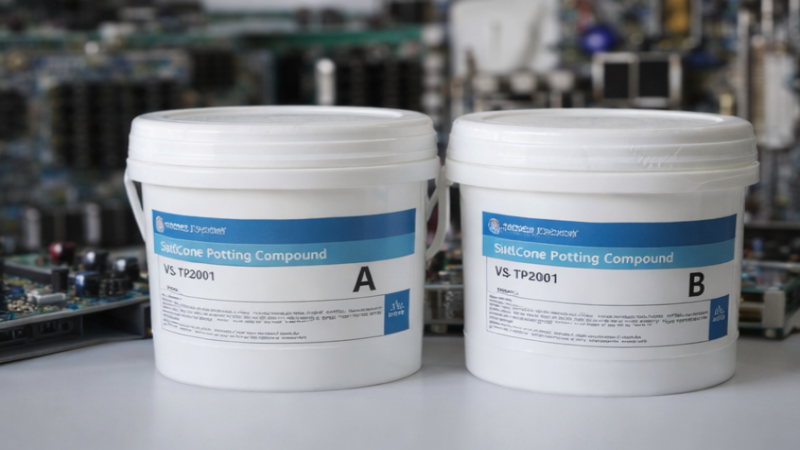
Silicone potting compounds offer a range of properties that make them particularly well-suited for electronics:
● Electrical Insulation: Silicone compounds are excellent electrical insulators. They help prevent short circuits and other electrical failures by providing a stable and secure environment for sensitive components.
● Thermal Stability: Silicone can handle a wide range of temperatures, typically between -60°C and +200°C, and can even tolerate higher temperatures in some cases. This ability to maintain its properties at both high and low temperatures ensures that electronics stay functional, even in extreme conditions.
● Environmental Resistance: Silicone is highly resistant to moisture, dust, UV radiation, and chemicals. This makes it ideal for electronics used in harsh environments, such as outdoor or industrial settings. It helps extend the life of the device by protecting it from corrosion and environmental damage.
Silicone potting compounds provide essential protection for electronic components in several ways:
● Protection from Environmental Factors: Potting with silicone creates a protective layer that shields electronics from moisture, dust, and other contaminants. This is especially critical for devices exposed to harsh outdoor conditions or industrial environments.
● Vibration and Shock Resistance: Silicone compounds help protect electronic components from mechanical stress, such as vibration or shock. This is particularly valuable for components used in automotive or industrial equipment, where such forces are common.
● Thermal Management: In high-power electronics, components can generate significant heat. Silicone potting compounds aid in dissipating this heat, preventing overheating and potential damage to sensitive parts.
Silicone potting compounds are used in a wide variety of electronic applications, offering both protection and improved performance:
Application | Benefits |
Circuit Boards | Provides insulation and protects from moisture and contaminants. |
Power Supplies | Dissipates heat and prevents electrical failures. |
Sensors | Shields sensitive components from external vibrations and environmental damage. |
Automotive Electronics | Reduces the impact of vibrations and protects against extreme temperatures. |
Industrial Devices | Ensures long-term performance by resisting environmental stress. |
When selecting silicone for electronic applications, it's crucial to understand the difference between neutral-cure and acid-cure silicones, as the curing process can significantly impact the safety and performance of electronic components.
Neutral-cure silicone, also known as oxime or alkoxy-cure silicone, is the preferred choice for electronics due to its non-corrosive curing process. This type of silicone releases no harmful byproducts, such as acids, during the curing phase. As a result, it does not risk corroding sensitive metal components, such as copper traces or solder joints, which are commonly found on printed circuit boards (PCBs). Neutral-cure silicone also offers excellent electrical insulation properties, ensuring that electronic components are safely encapsulated and protected from electrical interference. Its ability to remain stable across a wide temperature range further enhances its suitability for protecting components that may be exposed to varying environmental conditions.
On the other hand, acid-cure silicone, commonly known for its strong vinegar-like odor, releases acetic acid during the curing process. The presence of acetic acid can cause corrosion, especially on metal parts such as electrical contacts and leads. This corrosion can result in the degradation of electronic components, leading to potential failures. Additionally, acid-cure silicones may not provide the same level of long-term stability as neutral-cure silicones, especially in demanding environments where heat, humidity, or vibration are prevalent. For these reasons, acid-cure silicone is generally not recommended for use in electronics, where component integrity and reliability are critical.
Property | Neutral-Cure Silicone | Acid-Cure Silicone |
Curing Byproducts | Non-corrosive (alkoxy or oxime) | Releases acetic acid (corrosive) |
Impact on Metal Components | Safe, no corrosion | Can cause corrosion on metals |
Electrical Insulation | Excellent electrical insulation | May degrade electrical performance |
Temperature Stability | Stable across a wide range of temperatures | May be less stable in extreme conditions |
Application Suitability | Ideal for sensitive electronics | Not recommended for electronics |
The choice between neutral-cure and acid-cure silicone depends primarily on the specific requirements of the electronic application. Neutral-cure silicone compounds are the safest and most reliable choice, providing effective protection without introducing risks of corrosion or damage to delicate components. By understanding the curing mechanisms and the implications of each type, manufacturers can make informed decisions that ensure the longevity and reliability of their electronic devices.
Silicone potting compounds provide excellent electrical insulation, which is essential for protecting electronic components from electrical faults. These compounds have high dielectric strength, meaning they can withstand electrical stress without breaking down. This ensures the safety and reliability of sensitive devices such as circuit boards, power supplies, and sensors.
● Prevents short circuits: Silicone isolates components from electrical interference, reducing the risk of failures.
● High dielectric strength: Ensures stable performance in high-voltage applications.
Silicone’s electrical insulation properties make it ideal for systems exposed to varying electrical environments. Its ability to prevent electrical surges and short circuits is critical in applications like automotive electronics and industrial machinery, where reliability is paramount.
Silicone potting compounds also offer excellent thermal conductivity, which is crucial for managing heat in electronic devices. As electronics operate, they generate heat that can cause damage if not effectively dissipated. Silicone helps absorb and spread heat, preventing overheating and maintaining optimal operating temperatures.
● Efficient heat dissipation: Silicone compounds absorb excess heat, reducing the risk of component damage.
● Temperature stability: Silicone maintains its properties across a wide range of temperatures, typically from -60°C to +200°C, ensuring reliability in both extreme cold and heat.
These thermal properties are particularly valuable in high-power electronics, such as LED drivers, power modules, and automotive systems, where heat management is essential for preventing thermal damage.
Silicone potting compounds excel in protecting electronics from moisture, dust, UV radiation, and chemicals. Their natural moisture resistance helps prevent corrosion and degradation, making them ideal for use in humid or outdoor environments.
Property | Benefit |
Moisture resistance | Protects against corrosion and water damage |
Dust resistance | Shields internal components from dust and debris |
UV resistance | Maintains material stability despite prolonged sun exposure |
Chemical resistance | Protects against damage from exposure to chemicals |
These properties are critical for electronics in outdoor or industrial settings where they may be exposed to harsh weather conditions. Silicone ensures that devices remain operational and reliable in environments that would typically compromise other materials.
Silicone potting compounds are extensively used to protect sensitive electronic components, such as printed circuit boards (PCBs), sensors, and power supplies. By encapsulating these components, silicone prevents exposure to environmental factors like moisture, dust, and chemicals that could potentially damage the electronics. The encapsulation forms a protective barrier that enhances the durability and longevity of the components, ensuring reliable performance over time.
● Electrical protection: Silicone potting compounds provide electrical insulation, preventing short circuits and interference from external electrical noise.
● Environmental shielding: They shield delicate parts from environmental contaminants, reducing the risk of corrosion and damage.
● Physical protection: The potting material absorbs mechanical shocks and vibrations, which helps maintain the structural integrity of the components.
For example, sensors and power supplies, which are often exposed to environmental conditions such as humidity or vibration, benefit significantly from the added protection that silicone provides. This protection is essential for applications in automotive, industrial, and consumer electronics where the components are expected to function under challenging conditions.
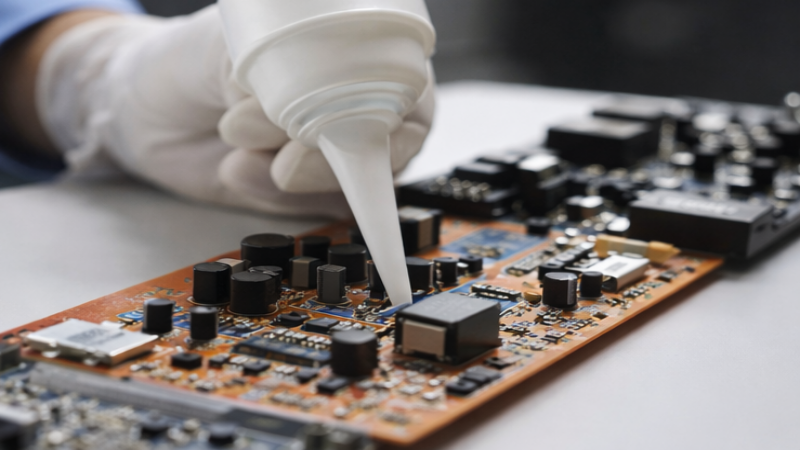
In high-power electronic systems, managing heat and minimizing the impact of shocks and vibrations are critical for maintaining performance and preventing damage. Silicone potting compounds, particularly those with thermally conductive properties, play a crucial role in dissipating heat and protecting power modules from mechanical stress.
● Heat dissipation: Thermally conductive silicone compounds help transfer heat away from sensitive components, preventing overheating and thermal damage. This is especially important in high-power devices like LED drivers, power supplies, and automotive modules where heat accumulation can be a significant issue.
● Shock absorption: Silicone compounds absorb mechanical shocks and vibrations, which is essential in applications where electronic devices are exposed to frequent movement or physical impact, such as in automotive and industrial environments.
When selecting silicone potting compounds for electronics, the curing type is a critical factor. Neutral-cure silicone is preferred because it does not release corrosive byproducts like acetic acid during the curing process. Unlike acid-cure silicone, which emits acetic acid that can damage metal components like copper or lead to corrosion of solder joints, neutral-cure silicone ensures a non-corrosive environment for sensitive electronic components. This makes it the safer choice for electronic applications, where metal integrity is crucial.
Another key consideration is material certification. A certified silicone potting compound ensures that the material meets necessary industry standards, providing additional reliability and peace of mind. Some important certifications to look for include:
● UL94 (for flammability resistance)
● IATF 16949 (automotive industry standard)
● ISO 9001 (general quality management)
These certifications guarantee that the silicone compound has undergone rigorous testing and meets performance and safety requirements for its intended use.
Choosing the right silicone potting compound also depends on the specific requirements of the electronic device and its operating environment. Different applications call for silicones with unique properties to address temperature, moisture, vibration, and chemical exposure.
Application | Key Requirements | Silicone Properties |
Automotive Electronics | High temperature resistance, vibration absorption, chemical resistance | Thermally stable, shock-absorbing, chemical-resistant |
Consumer Electronics | Moisture protection, dust resistance, flexibility | Flexible, moisture-resistant, durable |
Industrial Electronics | High temperature resistance, chemical exposure, durability | Heat-resistant, chemical-resistant, electrically insulating |
Neutral-cure silicone is crucial for electronics due to its non-corrosive properties and reliable insulation. It protects sensitive components, ensuring their longevity and performance. High-quality silicone potting compounds provide long-term benefits, such as excellent heat resistance and environmental protection. For reliable, durable protection, choosing the right silicone is essential. Suzhou Volsun Electronics Technology Co., Ltd. offers high-performance silicone potting compounds, ensuring optimal safety and reliability for your electronic devices.
A: A silicone potting compound for electronics is a material used to encapsulate and protect electronic components. It provides electrical insulation, thermal stability, and resistance to environmental factors, ensuring the longevity and reliability of devices in industrial settings.
A: When selecting a silicone potting compound for electronics, consider factors such as curing type (neutral-cure), temperature stability, moisture resistance, and the specific environmental conditions the components will face, such as vibration or exposure to chemicals.
A: Silicone potting compounds offer superior electrical insulation, heat dissipation, and protection against environmental damage. These properties enhance the reliability and durability of electronic components in industries like automotive, industrial machinery, and consumer electronics.
A: While silicone potting compounds can be more expensive upfront, their long-term benefits—such as improved device longevity, reduced maintenance, and protection against environmental factors—make them a cost-effective choice in many industrial applications.


