Suzhou Volsun Electronics Technology Co., Ltd.

Views: 0 Author: Site Editor Publish Time: 2025-12-13 Origin: Site


Today we'll discuss how to choose between cold shrink tubing and heat shrink tubing. We'll delve into several key aspects to help you make an informed decision.
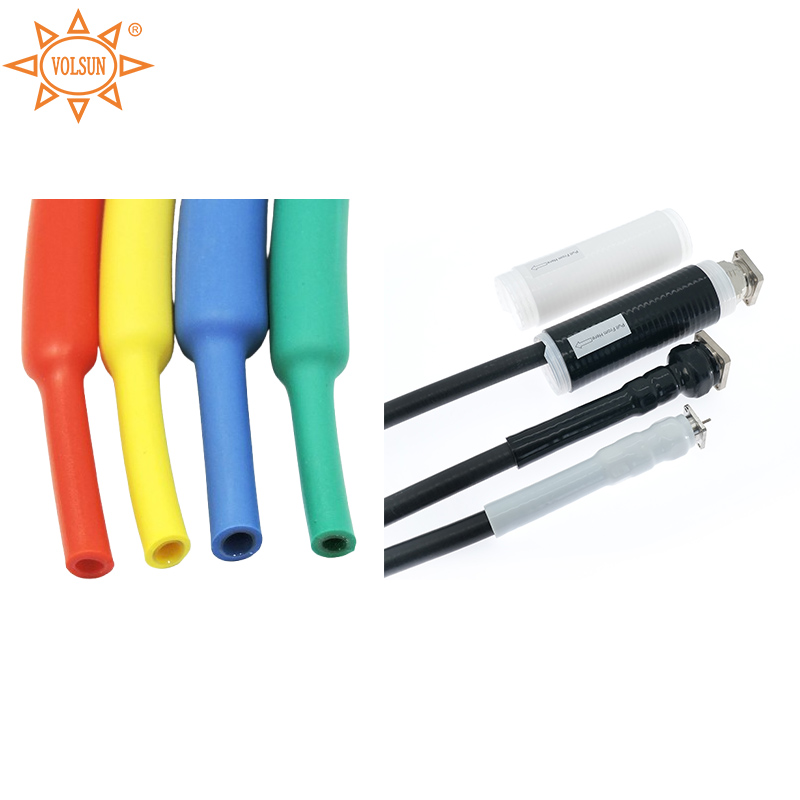
1.Application Environment and Safety: The Primary Decision Factor
Heat shrink tubing installation requires an external heat source, whether it's a heat gun or a blowtorch. This makes its use extremely dangerous, or even prohibited, in environments with flammable gases, dust, or any explosion risk (such as petrochemical plants, mines, and grain silos). Its application is also severely limited in extremely confined or enclosed spaces where access to power or heat-generating tools is difficult.
Cold shrink tubing was developed to solve these problems. Its "cold installation" characteristic means the entire process requires no heat source or electricity, making it inherently safe. This makes it the ideal choice for hazardous environments, explosion-proof locations, and unpowered enclosed spaces (such as manholes and underground cable trenches).
Therefore, if your construction environment conflicts with risks of fire, electricity, or explosion, then choosing cold shrink tubing is the obvious choice.
2. Process and Technology Considerations
The sealing quality of heat shrink tubing largely depends on the operator's skill and experience. Heating must be uniform and comprehensive; any localized overheating or underheating can lead to uneven shrinkage, warping, or even burn-through, creating potential weak points in the seal. Ensuring a perfect fit for every contour of extremely irregularly shaped objects is a significant challenge.
Cold shrink tubing, on the other hand, offers a standardized level of reliability. Through pre-expansion technology, it automatically shrinks radially in a uniform 360 degrees from the moment the support strip is removed, utilizing its strong elastic memory. This consistency ensures a seamless and tight fit to irregular surfaces (such as cable branch joints), forming a permanent, uniform, and reliable waterproof and airtight barrier.
Therefore, for applications requiring long-term immersion in water, with extremely stringent waterproof and moisture-proof requirements, or involving objects with complex and varied shapes, cold shrink tubing typically offers superior uniformity and reliability.
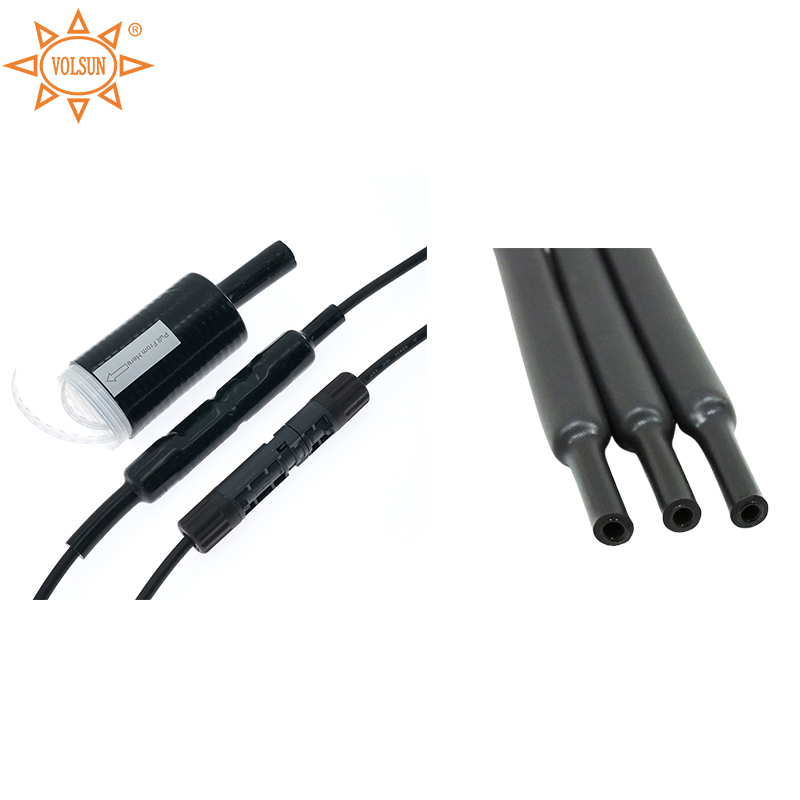
3. Installation Ease and Overall Efficiency
The installation process of heat shrink tubing is relatively cumbersome, requiring preparation and operation tools, and each joint takes a considerable amount of time to process. This isn't a problem in small-batch or DIY scenarios, but in large projects requiring the processing of hundreds or thousands of joints, the accumulated time and labor costs become very significant.
Cold shrink tubing installation is revolutionaryly simple. No tools are needed, no waiting is required, and an average worker can typically seal a joint in minutes. This extremely high installation speed significantly improves on-site construction efficiency, shortens project cycles, and thus reduces the overall labor costs of the project.
Therefore, in areas requiring emergency repairs, large-scale deployments, or where labor costs are high, the efficiency advantage of cold shrink tubing can quickly offset its higher material costs.
4. Material Performance and Long-Term Durability
Heat shrink tubing commonly uses materials such as polyolefins, and through formulation improvements, properties such as flame retardancy and double-walled adhesive waterproofing can be achieved. However, under long-term exposure to strong ultraviolet radiation, ozone, or extreme high and low temperature environments, some heat shrink tubing materials may age, become brittle, or experience performance degradation. Cold shrink tubing (especially silicone rubber) excels in weather resistance. It inherently resists UV radiation and ozone, and boasts a wider operating temperature range (e.g., -60°C to over +200°C). Simultaneously, silicone rubber offers excellent flexibility and tear resistance, allowing it to withstand harsher physical environments.
Therefore, if your application involves year-round exposure to wind and sun, significant temperature fluctuations, or dynamic situations requiring exceptional flexibility, silicone rubber cold shrink tubing is a more durable choice.
5. Cost Structure Considerations
The initial material cost of heat shrink tubing is typically lower, which is its most direct cost advantage.
While cold shrink tubing has a higher unit price, the total cost of ownership must be considered when making a decision. This includes the cost of tools, energy, and, more importantly, the high labor costs incurred due to slower installation. However, when you factor in the implicit benefits of improved safety, reliability, and efficiency, the overall economics of cold shrink tubing may actually be higher.
Based on this factor, if your budget is limited to the material itself and the application is simple, heat shrink tubing is more economical. However, considering the entire project lifecycle and total cost, cold shrink tubing may be a more worthwhile investment.


